―Canderous Ordo, "Mandalore the Preserver"
Mand'alor, or Mandalore as it is written in Basic, is the title used by the supreme leader of the Mandalorian people and culture. In the native meaning of Mando'a, the title means "sole ruler". Originating with Mandalore the First, the mythic leader of the Taung warriors who went on to become the first Mandalorians, Mand'alor became the title passed down for use by the subsequent leaders of the Mandalorian people for generations. The Mand'alor acts as a combination of sorts of both king and warrior general, and is the closest to a head of state the widespread Mandalorian clans possessed, as well as acting as the de facto ruler of the Mandalorian homeworld of Mandalore. The importance of the Mand'alor is reflected in the six tenets that outline Mandalorian culture, the Resol'nare, one of which dictated that a Mandalorian rally to the Mand'alor when called upon. Outsiders would adress Mand'alor as Lord Mandalore as a sign of respect
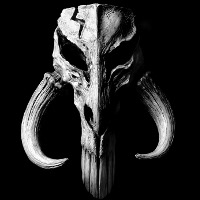
For years, the position of Mand'alor was traditionally symbolized by the passing of the mask of Mandalore upon the death of the previous owner, but in later times this custom had faded into antiquity, and new Mandalores needed only the support of the people to ascend to the role. After the creation of the Darksaber, Clan Vizsla most strongly believe that the weapon was a symbol of being worthy to the title of Mand'alor, though that was not a widespread opinion among all the clans as there have been Mandalores without the weapon claiming the title.
Numerous Mandalores also took to adapting descriptive epithets, in order to distinguish themselves from those who came before and after. Following the foundation of the New Mandalorians, the pacifist sect rejected the authority of the clan-chosen Mandalores, and instead appointed their own leaders in opposition to those who ruled the warrior clans. The Death Watch, in turn, appointed their own Secret Mandalores in opposition to both the New Mandalorians and the unaffiliated warrior clans. During this period of social division in the Mandalorian culture, the traditionally chosen Mand'alor of the clans became known as the "True Mandalore", as a means of countering the claims of the New Mandalorian and Death Watch leaders. Throughout the history of the galaxy, those who declared themselves Mand'alor met with varied degrees of success in their attempts to lead the Mandalorian people, but they almost all are remembered in songs and stories.
Known Mandalores
- Mandalore the First: Under his leadership, the Taung conquered their new homeworld Manda'yaim and rebranded themselves as the Mando'ade - "sons and daughters of Mandalore".
- - Mandalore the Conqueror: Greatly expanded the resources and territories of the Mandalorians, establishing the Mandalorian Crusaders.
- - Mandalore the Indomitable: Leading the Mandalorians in conquest of new worlds, he fought against the Sith Lord Ulic Qel-Droma. He was defeated in single combat by Ulic and thus pledged his service and that of his warriors to the Sith in the Great Sith War.
- - Mandalore the Ultimate: Succeeding the Indomitable, he reorganized the Mandalorian warriors into the Neo-Crusader movement, and led the Mandalorians into the Mandalorian Wars with the Republic, conquering vast expanses of the galaxy. He met his end against Jedi Knight Revan.
- - The Last Taung Mandalore: The first Mandalore since the First to not have Mandalore's Mask, he was unable to solidify his claim and unite the dispersed clans in the wake of the Mandalorians' defeat in the Mandalorian Wars. Some refer to him as Mandalore the Unknown, but it was never his official title.
- - Mandalore the Preserver: Canderous Ordo recovered Mandalore's Mask and dedicated his life to uniting the clans once more. However they remained predominantly fragmented for several centuries. His base of operation was on the moon Dxun, and while there is no Mandalorian settlement there today, many Mandalorians take the opportunity to go there once in their lifetime to test their mettle against the beasts there.
- - Mandalore the Lesser: Rising to fame in the gladiator pits, he was aided by the reconstituted Sith Empire to rise to the top. He used his notoriety to claim the title of Mand'alor, and managed to rally the widespread Mandalorian forces, but did so in accordance with the orders of his Sith masters. In order to gain more support, Mandalore the Lesser initiated a galaxy-wide competition for glory known as the Great Hunt. He was challenged and killed by the victor of the competition.
- - Mandalore the Vindicated: Artus Lok, champion of the Great Hunt, took the title of Mand'alor upon killing the previous holder of the title. To ensure the Mandalorians remained allied to the Sith as highly paid mercenaries, he consolidated his power and defeated a pro-Republic Mandalorian schism led by Jicoln Cadera who held to the belief that the Mandalorians should honor the Preserver's promise to defend the Republic against the Sith.
- - Mandalore the Avenger: Shae Vizla took up the mantle of Mand'alor following the death of Mandalore the Vindicated, keeping the clans united in the fight against the Eternal Empire. Under her leadership the Mandalorians became a more neutral faction once more in regards to the Sith Empire and the Galactic Republic, owing allegiance to neither side.
- - Mandalore the Uniter: Aga Awaud, a mercenary during the New Sith Wars. At the time, Mandalorian space was suffering a widespread plague and attacks from raiders in the surrounding sectors. He sent out a call for Mandalorians throughout the galaxy to rally in defense of the Mandalore sector in what became known as The Return, and he claimed the mantle of Mand'alor. As Mandalore the Uniter, he set about to ensure the Mandalorians survived the New Sith Wars, ad under his leadership, Mandalorian space emerged from the wars as a significant industrial power in the galaxy, offering protection to the sectors that surrounded it, and becoming a symbol of stability in the Outer Rim territories.
- - Mandalore the Binder: Born the son of a rug weaver on Harswee, a planet known for its luxurious loom-woven carpet exports, he eventually rose to claim the title of Mand'alor. He was a great leader, solidifying the mercantile exports from Mandalorian space.
- - Mandalore the Destroyer: Ranah Teh Naast was a confident woman who took pride in the Mandalorian heritage of culture. She is often remembered for the famous speech to the Consul of Luon, where she likened her people to an idea incapable of being killed, inadvertently revealing her belief in the immortality of intellectual concepts.
"Here's why you can't exterminate us, aruetii. We're not huddled in one place—we span the galaxy. We need no lords or leaders—so you can't destroy our command. We can live without technology—so we can fight with our bare hands. We have no species or bloodline—so we can rebuild our ranks with others who want to join us. We're more than just a people or an army, aruetii. We're a culture. We're an idea. And you can't kill ideas—but we certainly can kill you."
- - Mandalore the Hammerborn: Growing up in the alleys of Kol Atorn, he learned Mando'a from the emigrants and exiles that had settled there. Claiming the title of Mand'alor, he would go on to be remembered as one of the greatest leaders of the culture, creating a renaissance of sorts in Mandalorian craftsmanship, art, and music.
- - Jaster Mereel: A native of Concord Dawn, Jaster was known as a man of strong morals. Sensing a general dissatisfaction with the decline in ethics among the more dishonorable members of the warrior culture, he fought to become the new Mand'alor and bring a new ideal to the clans, beating out the barbaric Tor Vizsla in the process. He declared that any Mandalorians who wished to fight would do so as honorable, highly paid soldiers, and issued the Supercommando Codex, a new statute of behaviour for Mandalorian mercenaries. This was opposed by the New Mandalorians (who did not acknowledge Jaster as the Mand'alor), and Vizsla's own radical followers who called themselves the Death Watch, and civil war broke out. Jaster was killed by Tor Vizsla.
- - Jango Fett: A native of Concord Dawn. Taking up the title of Mand'alor after the death of his adopted father, Jaster Mereel, Jango continued to lead Mereel's True Mandalorians in the Civil War against the Death Watch. He was among the very few survivors of the True Mandalorians, and disappeared for a short while after the end of the civil war, only to reappear to avenge his father's death by killing Tor. After successfully dispatching Tor Vizsla, Jango Fett grew distant from the Mandalorian people and his role as Mand'alor. He was paid to be the template for the Republic's clone army. This and his subsequent distance from the Mandalorians on the whole has cast Fett's legacy in a bad light for many Mando'ade.
- - Pre Vizsla: The governor of Concordia, Pre was in fact the leader of the Death Watch and responsible for terrorist attacks on Mandalore. Wielding the Darksaber gave credit to Pre's claim as Mandalore for the Death Watch, but his reign as Mandalore was ultimately short-lived as Darth Maul challenged and defeated him for the leadership of the Death Watch. From that point, the Death Watch fragmented into the Nite Owls who refused to acknowledge Maul's claim as Mandalore, and the Super Commandos who remained loyal to him as he had bested one of their own in combat.
